


People are starting to get pretty scared of AI progress. Things are going very quickly; there have been alarming happenings (e.g. Hugging Face); there are reasonable arguments that maybe it will get much worse and there’s a risk that everyone dies.
One way to picture the situation is that it’s a bit like driving a bus downhill across rough terrain on a foggy night. The terrain has been getting progressively steeper and more treacherous, and the bus is picking up speed. It has started to periodically smash into small obstacles.
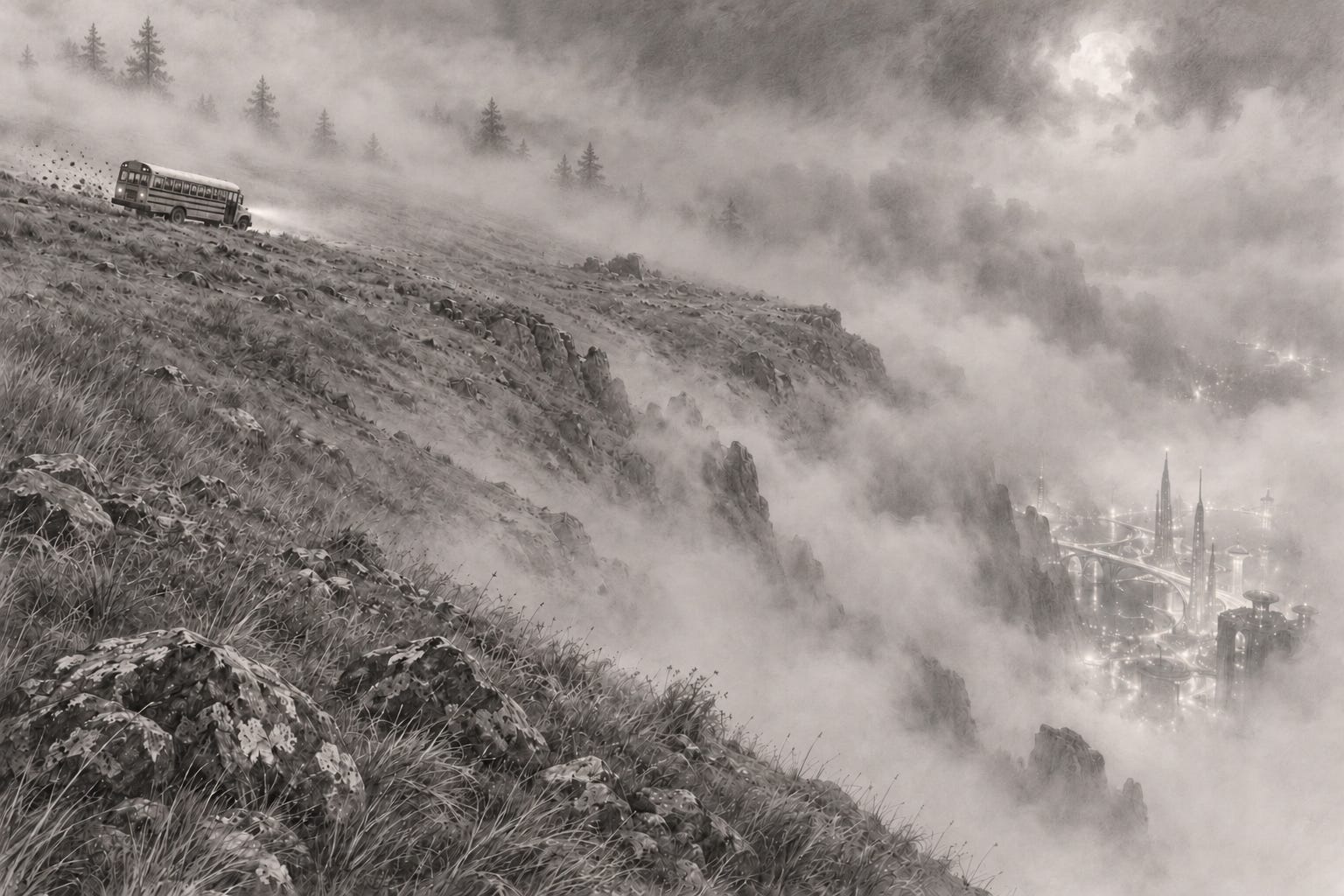
(Why drive the bus at all? Because some of the passengers in the back are dying, and we’re pretty sure there’s a hospital down this way somewhere, although nobody is really sure how far away it is or how steep things are going to get.)
So: how do you drive a bus downhill, especially when it’s your first attempt? Well, even if things are pretty urgent, you still probably don’t want to be going flat out on the accelerator. In fact you have a lot of other options:
You can fully stop the bus for a while to better orient and improve things
You can ease off the accelerator (or decide you’ll stop for a bit) when you see something particularly scary up ahead
You can pick some maximum speed to stay below, or even some maximum acceleration (remember it is getting steeper!)
You can have some of your passengers try to navigate from your crude maps, and find a route that maybe doesn’t go straight off a cliff at some point
Similarly, in the AI situation, a lot of people have the intuition that it would perhaps be better to do something other than go as fast as we can. The idea of pacing is that we should be figuring out some of these to focus on, and pursuing a strategy which isn’t just “foot to the floor”. And the menu of alternative strategies for humanity carries over decently well from the bus situation:
We could pause all AI development now to figure out more about what the situation is
We could plan now to slow down or pause when we anticipate problems in the near future, or when AI causes damages of a certain size
We could agree certain rates of progress that we will stay within (though unlike a bus, AI has no canonical speedometer, so we’d first need to settle what to measure — training compute? benchmark scores? … the challenge is to make it effective and not too game-able)
We could think seriously about which versions of the technology look more or less concerning, and focus our development efforts on those that look relatively less alarming, rather than just whatever will be most powerful fastest
Complications
The AI situation isn’t quite as straightforward as merely driving a bus down a precipitous hill in the fog. A few extra factors worth mentioning:
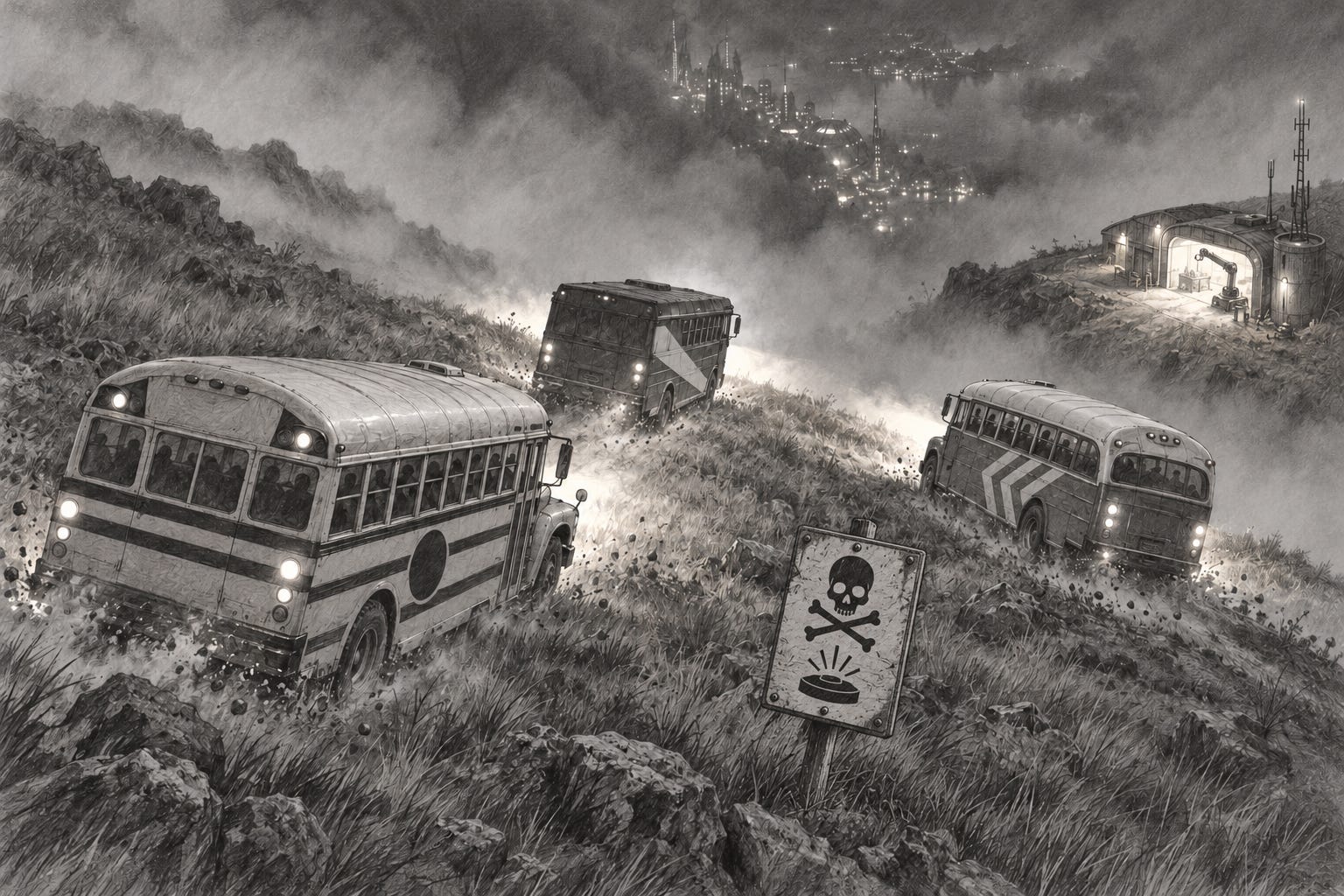
1. There are lots of buses … racing …
Different AI projects are like different buses — they may all want to get the passengers to the hospital, but there’s also a prize and glory on offer for whoever makes it there first
It doesn’t even have to be about the hospital, or the steeper terrain ahead! There’s plenty of money available for being near the front of the pack in a given year
They are extremely competitive, and also they seem to be catching each other’s slipstreams in a way that is keeping the race pretty tight even as it gets messier
2. Somewhere up ahead is a huge minefield
The mines get much, much worse the further along you go — eventually, some of them are nukes
If you make it far enough and then hit a really bad mine, you take everyone else with you1
Together, these create an awkward coordination problem. Nobody is very excited to just slow down too much by themselves, because that could mean the other guys (who are less careful!) will race ahead. So we want some kinds of agreement that everyone can stick to, and can tell when the others are sticking to as well. So with AI — pacing is a collective action problem.
3. You can improve the bus
You can clean up the windshield and wipe the dirt off the lights, so it will be more obvious if you’re about to drive into something
Correspondingly, internal monitoring and external transparency requirements for AI projects, and better forecasting around the future of AI, all help improve our visibility
You can test whether the brakes actually work and try to figure out what your stopping distance is, or how well you can steer as things get more vertical (though it’s not clear how much low-speed tests tell you about high-speed braking)
You can install buffers on the bus, so that it may survive impacts with bigger obstacles without (too much) damage
Notably these are a bit involved, and may be tricky to do when the bus is going flat out — which is itself a reason to ease off the accelerator
4. There are garages along the way
The further down the mountain we go, the more of the fruits of civilization are available
If we make it down far enough, maybe we can get brighter lights installed, or give us better radios to coordinate between buses, or add some kind of automatic braking system so it’s no longer possible to drive the bus through things
These add crucial nuance to the question of what’s good to do. Differential technological development could be a big deal! Strong epistemic technology could help us to anticipate the landscape, strong safety tech could help us handle dangerous situations, and strong coordination technology could help us to negotiate and uphold complex agreements. This nuance both changes what we might think is the wisest path, and also makes it more important to have formal agreements (if you are going to slow) rather than just moral pressure against reckless action — because the plausibility of a “race to the garage” strategy means it will likely be very hard to have everyone see it as obvious defection.
Ultimately the question of how to navigate this is thorny (and pacing is just a part of that thorniness). But we think it at least helps if we’re all looking at a similar picture of what’s happening.
Acknowledgements: This post was born in a workshop discussion session, with several people riffing on a metaphor until we felt like it was doing a reasonable job of capturing the key features of the situation. Many thanks to those who contributed! Errors in the vision remain our own.
At least if you’re in the lead at the time. The story may be more complicated if you’re not.